Concrete Jungle Gym: Why Yakuza's Street-Level Combat Hits Different Than Any Superhero Brawler
There's a moment early in almost every Yakuza game where you grab a traffic cone off the sidewalk and cave someone's skull in with it. No tutorial prompt. No special meter. Just a cone, a dude who deserved it, and a satisfying crunch that rattles through your controller. It's stupid. It's beautiful. And it does something no superhero game has managed to replicate in twenty years of trying.
It makes you feel like a person — a very dangerous, very angry person — instead of a god.
The Problem With Playing God
Superhero games have a fundamental design tension baked into their DNA. You're supposed to be powerful and challenged. The solution most studios land on is padding enemy health bars, throwing fifteen guys at you at once, or inventing increasingly absurd villains who can somehow match your reality-bending abilities. The result is combat that looks spectacular in trailers and feels hollow by hour three.
Marvel's Spider-Man is a genuinely great game, but let's be honest: the combat is a rhythm puzzle dressed up in red spandex. Batman's Arkham system — which basically every superhero brawler has copied since 2009 — turns fighting into a dance recital. Hit the counter button at the right moment, chain your combos, collect your grade. It's elegant. It's also emotionally sterile.
Yakuza said forget that.
Physics, Furniture, and Pure Chaos
The Yakuza series — especially the Dragon Engine entries like Yakuza 6 and Judgment — treats the environment as a weapon cache. A bicycle leaning against a convenience store? Pick it up. A folding chair outside a yakitori stall? Swing away. A full-size refrigerator in the back of a hostess club? Brother, you already know.
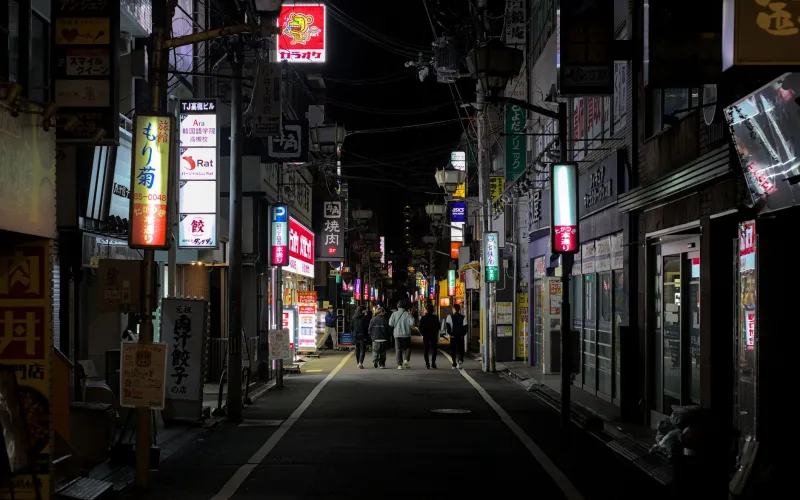
This isn't just a gimmick. It fundamentally changes how you read a space. You stop seeing Kamurocho as a backdrop and start seeing it as an arsenal. Every alley fight becomes a quick environmental scan — what can I grab, what can I throw, how do I end this fast? That improvisation creates a loop of creativity and reward that scripted combo systems simply can't match.
The heat actions deserve their own paragraph. These context-sensitive finishing moves — triggered when your heat gauge is full and an enemy is near a specific object or position — are some of the most committed acts of violence in gaming history. Slamming a guy's face into a car hood. Pouring a boiling kettle over someone's head. Dropping a full bicycle on a dude who's already down. They're excessive. They're cinematic. And crucially, they feel earned rather than automatic.
The Underdog Equation
Here's what Yakuza understands that most superhero games don't: the power fantasy hits hardest when you start from a place of vulnerability.
Kiryu Kazuma is a big dude, sure. But he bleeds. He staggers. Early in fights he eats shots that rock him, and if you play recklessly you'll spend half the battle getting stomped. The damage model isn't punishing in a frustrating way — it's communicating stakes. Every fight feels like it could go wrong, which means every victory feels like something you wrestled away from the universe rather than something the game handed you.
American audiences are genuinely tired of consequence-free action, even if they don't always articulate it that way. The success of grittier superhero properties — the early Netflix Daredevil, Logan, the relentless brutality of The Boys — suggests there's a huge appetite for power that costs something. Yakuza has been serving that meal since 2005.
Styles, Stances, and Swagger
The style-switching system introduced in Yakuza 0 and refined through Kiwami added another layer that most brawlers lack: personality. Kiryu's Brawler style is all elbows and raw aggression. Rush is quick and slippery, built for evasion and fast counters. Beast mode is exactly what it sounds like — you become a wrecking ball who picks up heavy objects and treats humans like speed bumps.
Switching styles mid-fight isn't just tactical; it's expressive. You're not just reacting to enemies, you're choosing what kind of fighter you want to be in this specific moment. That agency is rare. Most games give you one combat identity and polish it to a shine. Yakuza gives you a whole wardrobe of violence.
Majima's styles in 0 push this even further. The man fights with a baseball bat, a knife, breakdancing moves, and pure unhinged chaos depending on the situation. Playing as Majima is less like controlling a character and more like being possessed by one.
Why This Resonates Right Now
We're in a cultural moment where people are genuinely exhausted by the invincibility fantasy. Superhero fatigue is real — box office numbers have been screaming it for two years. The genre that once felt aspirational now often feels like homework, and part of that is because the stakes have been inflated so far beyond human scale that it's hard to connect.
Yakuza keeps its stakes grounded. You're not saving the universe. You're protecting one kid, or one woman, or one block of a city that matters to you. And the combat reflects that intimacy — you're fighting with your hands and whatever's lying around, because that's what people actually do when everything goes wrong.
There's something deeply American about that, weirdly enough. The scrappy underdog who improvises, takes hits, and refuses to quit is as much a part of US cultural mythology as it is Japanese. Yakuza just executes it with more bicycle-based head trauma.
The Blueprint That Nobody Copied
It's genuinely strange that in the fifteen-plus years since Yakuza established this combat language, almost no Western studio has seriously attempted to replicate it. The environmental interaction, the heat system, the style-switching, the way the game commits to making you feel the weight of every hit — it's a complete design philosophy that's sitting right there, open source, and the industry has largely ignored it.
Maybe it's because the system requires a specific kind of world-building to support it. Kamurocho isn't just a setting; it's a participant in every fight. The density of the environment, the objects placed with intentional generosity, the way NPCs scatter and react — it all works together. You can't just bolt this onto a game that wasn't designed around it.
Or maybe Western studios are just too committed to the superhero template to try something messier, more human, and frankly more fun.
Yakuza's combat isn't perfect. The camera can be a nightmare in tight spaces, and some of the later games got a little too in love with their own spectacle. But at its best, it delivers something rare: the feeling that you survived a fight rather than completed one. That distinction is everything.